An Islamic understanding on why we feel continually restlessness, what we actually yearn, and realizing our fullest potential bestowed by Allah
or
Traversing the Ebbs and Flows of Life With Clarity, Acceptance, and Serenity
This article has also been published on substack.
When does our journey begin? Is it just a movement of our body across space and time, or is it perhaps something happening inside of us? Did it arise, one fine day, as a thought when speaking to a friend over coffee about their latest adventure to some faraway, exotic location? Or perhaps when watching a documentary about a distant land and feeling the urge to explore what is unknown to us? Or could it be that it is a yearning that resides within each of us, a primordial call that is continuously calling out?
From whence does a journey begin?
Does it spawn as a thought
in the web of one’s mind?
Or is it
like a drop of water
in a deep well,
whose echo
emanates upwards and outwards
as a yearning of the heart?
The primordial journey begins, as Hz. Mevlana Rumi speaks of it in the first couple of verses in the Masnavi, from the very beginning of our being:
Listen to the reed and the tale it tells,
how it sings of separation:Ever since they cut me from the reed bed,
my wail has caused men and women to weep.I want a heart that is torn open with longing
so that I might share the pain of this love.Whoever has been parted from his source
longs to return to that state of union. 1
The Song of the Reed, as it is referred to as, speaks of this primordial yearning. It highlights the Qur’anic reminder of the Rouz e Alast when Allah asked all of humanity "alastu bi rabbikum" - "Am I not your Lord?" - and our resounding response "balla shahidna" - "Yes, we bear witness!" (Qur'an 7:172). Thus deep down in our being, in our very essence, we are aware of our Divine longing for we feel that pang of separation from the Source of All Being, the Nurturer and Provider, our Creator. As we go through life, studies, love, pain, loss, happiness, accomplishment, we find ourselves repeatedly in states of longing and yearning. And although the real longing is for Him, our mind betrays us by confusing ephemeral desire with eternal longing.
This is why when we are in the heart of nature, away from the din and noise of everyday urban life, we feel an immense profundity swell up within us. It is not the nature itself that has this quality but rather it is our soul finally beginning to hear the call that has been crowded out all this time by the noise and busyness of our daily lives. In that sense nature becomes the vessel of remembrance for it is a reminder of the primordial environment of living that our ancestors experienced, but also because it readily presents the beauty of the Creator back to us, something which we are bereft of in our modern urban cities.
"Whenever we step out into virgin nature and we feel our hearts leaping, and our stresses falling away... that is not just because there is something intrinsic in organic matter - that has some magic pharmaceutical effect. It's deeper than that. It is because when we are amongst those things, there is a recollection, a memory, we haven't quite forgotten." - Shaykh Abdal Hakim Murad 2
Photo by Thomas Dornier on Unsplash
Our mind attempts to explain away our yearning with one ephemeral thing or the other, and we chase after it and even after having gratified ourselves weeks will pass, or perhaps even months, but we find ourselves once again in the same feeling of dissatisfaction and discontentment. And once again we tell ourselves it is something else that we want or need; we scratch the surface and find another reason we happen to believe is the source. And yet, once all is said and done, we find ourselves in the same place of discontentment. Rinse and repeat.
Existentialists such as Jean Paul-Sartre refer to it as the "existential lack" and would argue that this is the inevitable and unrequitable nature of humankind.
The Qur'an acknowledges this base nature of human:
"Man was truly created anxious: he is fretful when misfortune touches him, but tight-fisted when good fortune comes his way." (Qur'an 70:19-20)
Yet what modernity recognizes as an inevitability and gives us a binary choice of either nihilism - that nothing can be done about it - or hedonism - to just follow one's desires to maximize pleasure, Islam instead gives us the antidote to this restlessness that is at the core of our very being, which is both a guide to action as well as a means to find equilibrium within ourselves.
In the very next verse in the Qur'an, Allah guides us on how to deal with such anxiety:
"Not so those who pray and are constant in their prayers; who give a due share of their wealth to beggars and the deprived; who believe in the Day of Judgement and fear the punishment of their Lord [...] who are faithful to their trusts and their pledges; who give honest testimony and are steadfast in their prayers." (Qur'an 70: 22-27, 32-34)
The fact that the acknowledgement of our anxious condition is immediately followed up with how to deal with it highlights and speaks volumes about His Merciful, Caring, and Loving Nature. The antidote to our anxiety-ridden lives - the continual dissatisfaction and discontentment we experience - is in fact acts of remembrance, and actions that are aligned with goodness (in other words Allah's Will). It recognizes our fragility and frailty before the headwinds we experience in the ocean of existence, and provides us the assurance and shelter we need to guide us through the storms.
"truly it is in the remembrance of Allah that hearts find tranquility." (Qur'an 13:28)
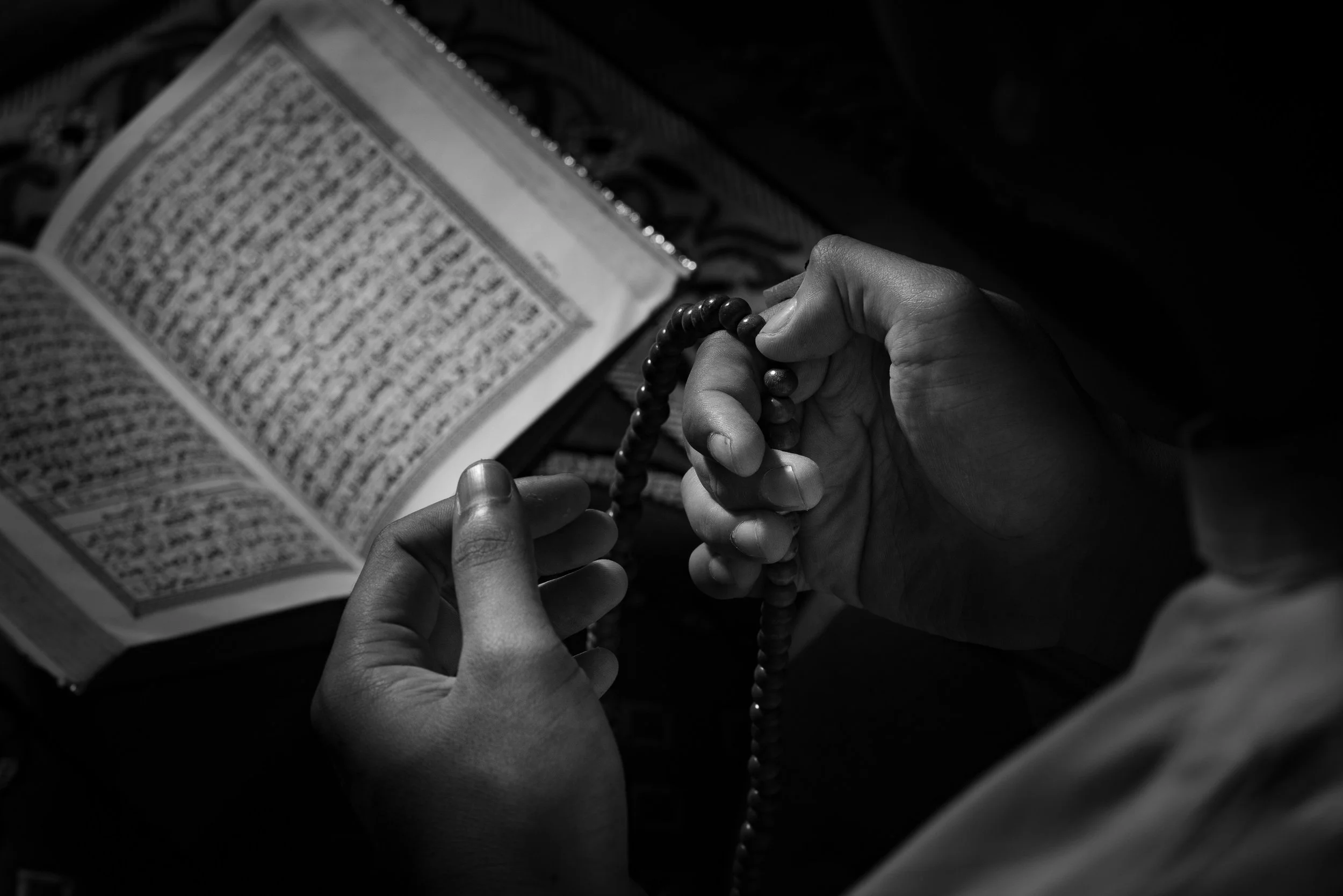
Photo by fikry anshor on Unsplash
But where is our anxiety/discontentment calling us to exactly? Is it a physical place that we are being drawn to? To look upon the Song of the Reed again - the lament of the ney in light of the Covenant of Alast, it is union that we seek, union with the Source with Allah, that our yearning is really calling out for.
"There is within each of us, as part of the fitra, a longing to return to that state where Allah was there: present, witnessed. We all have that. Human beings naturally have that desire to return to Unity, and to escape from the confusing pain and stress and anxiety of clashing multiplicity." - Shaykh Abdal Hakim Murad 2
But how does one do so in the here and now, while still living, while still in the state of "multiplicity" - as Shaykh Abdal Hakim Murad refers to it - and thus necessarily separated from the One? Is death not the only road to Awe? Where we are transferred from this state of separation into a state of Unity?
The Qur'anic verses shared earlier provide us some insight. Through continuous remembrance of Him (such as through prayer), of sharing one's wealth, of being honest and truthful, of being trustworthy in our dealings with other humans - in a generalized understanding being good and in harmony with people and society - do we essentially begin to bridge separation. For if we perceive anxiety as a by-product of separation, then the stilling of that anxiety, or overcoming it, is indicative of becoming closer to Him.
Know Thyself
There are two sayings attributed to the Prophet Muhammad ﷺ often cited by those on the path of tasavvuf (Sufis) that inherently relate to this interplay of separation and unity within us. Although the isnad of these ahadith are not certain, with some scholars claiming these are not proven to be hadith, they are accepted nonetheless as aphorisms that reflect Truth and Reality. One of them is:
"Whoever knows himself knows His Lord."
One of the famous early Sufi mystics Ibrahim ibn Adham of Balkh (2nd century AH/8th century CE) is attributed to having said something similar and might be the source of the revised saying. He said:
"Verily, whoever knows himself will be busy with himself. Whoever knows his Lord will be busy with his Lord to the exclusion of anything else." - Ibrahim ibn Adham 3
The other saying attributed to the Prophet Muhammad ﷺ is:
"Die before you die."
This too is similar to a saying by Hz. Umar:
"Weigh/measure yourselves before you [your deeds] are [physically] weighed [on the day of Qiyamah]. Take account of yourselves, before it is physically done to you, for indeed it will make it easier for you tomorrow if you take account of yourselves [now, ahead of time]…" 4
So what do these actually mean, and how do these pertain to the journey of our soul?
Allah says in the Qu'ran:
"Do not be like those who forget Allah, so Allah causes them to forget their own selves/souls: they are the rebellious ones" - (Qur'an 59:19)
One way to interpret "forget their own selves" can be that the people don't realize or notice the root of their actions or behavior, and hence of their being. If we aren't aware why we act/respond in certain ways then we essentially have a blind spot about our own self. They thus "cease to listen to what benefits the soul and to do what would purify it". 5 In contradistinction "knowing/remembering the self" would thus be an act of self-awareness that provides us knowledge about ourselves, so that we see what is in line with Allah's Will, and what is not. Shaykh Habib Umar bin Hafiz explains this quite succinctly:
"[...] if someone comes to know their lower self, they become aware of its deceit and trickery. They then realize that they have no option but to sincerely turn to Allah and seek His help. They thus come to know Him. Another meaning is that when we reflect on our own makeup as human beings, we come to know about our Creator. We may reflect on the fact that Allah breathed into us from His spirit, and that the true nature of the spirit is best known by Him. This points us towards knowledge of Him." 6
The lower self, the nafs al ammarah, is that part of us which is driven by base desires - hunger, lust, greed - and yearns to sate its appetite with them. It attempts to deceive and mislead us by making us believe a certain line of reasoning, or by convincing us that the thought arising within us is valid and true. Through the perspective of tasavvuf we learn that it is the lowest form of our self, the lowest rung on a ladder that ascends only upward. Yet if we remain forgetful of who we are, and thus become forlorn even by Allah then we remain lost, retching in the constant loop of anxiety and self gratification.
Therefore, the pangs we feel come from our soul, the unadulterated part of our being which can get cloaked by our nafs al ammarah (lower self). It is this part of our being that is guiding us back towards Allah. But the chatter of the lower self, that tends to manifest as thoughts and doubts arising in our mind, can mislead us to believe its reasoning for why we are feeling discontent, or yearning.
It should be made clear however that if we find a surge of contentment or clarity in the place we have been drawn towards, or the people we meet, or the objects we attain, it is not these things in themselves that are the object of our yearning and satisfaction, which the nafs al ammarah would immediately latch onto as a reasoning. It is not these things that make us feel home, but rather they are vessels that point towards the Ineffable: Him. It is necessary, especially as wayfarers on the path, to look past the apparent (zahiri) materialness of the world we interact with, and draw back the veils to look upon what lies hidden (batini) behind them.
"Knowing one's self" and "dying" thus are intertwined in the same concept of recognizing our base desires, understanding how they are triggered and erupt and tend to guide us in acting in particular ways, and the willful choice of not succumbing to its whims. Nafs al ammarah when translated in another way lends a better understanding of this aspect of our self: the commanding self. It is that which commands us, instead of us being in control we become a slave to its will and desire.

Photo by Peter Conlan on Unsplash
The nafs al ammarah comes in the way of us getting to know our Lord, and the only way for us to do so is for it to die. Hence "die before you die". It is the death of the ego/self, the first order of separation from Allah. It is when we are able to bring it under our control, that we step up the ladder towards nafs al luwummah - the blaming self - and eventually nafs al mutmainnah - the contented self.
To know one's self means to know intimately who one is, what desires and traumas shape our behavior and actions, and what inclinations and gifts we have been bestowed upon that we can make use of them. The descent into ourselves, into the chasms of our own being, is to scrutinize the nooks and crannies of our own being where hide our darkness that tends to shape our behavior, or that muffles those moments of yearning and longing and become antagonistic elements that stray us from truly finding contentment.
Bulleh Shah, the 18th century Punjabi wali (Sufi saint) writes in one of his poems that instead of embarking on a physical journey to look for Him, seeking Him in the wilderness away from the world, what we really need to do is just open ourselves to Him.
ہو تیرے جیہا مینوں ہور نہ کوئی
تیرے جیہا مینوں ہور نہ کوئی
ڈھونڈاں جنگل بیلا روہی
ڈھونڈاں تاں سارا جہان
وے وِہرے آ وڑ میرے
بھاوی جان نہ جان
Oh—there is no one like You for me,
no one at all like You.
I searched through forests, through wild groves and wastelands.
I searched the entire world.
But come—
step into the courtyard (of my heart),
even if You do not yet reveal Yourself.
Allah's Calling is ever present. It is not for us to decide what to do, but rather to take the first step to invite Him in. For that opening of the courtyard of our heart is the first step that this Hadith Qudsi refers to:
"Whoever comes to Me a handspan, I come to him an arm’s length; and whoever comes to Me an arm’s length, I come to him a fathom; and whoever comes to Me walking, I come to him running." - Sahih Muslim 2687 7
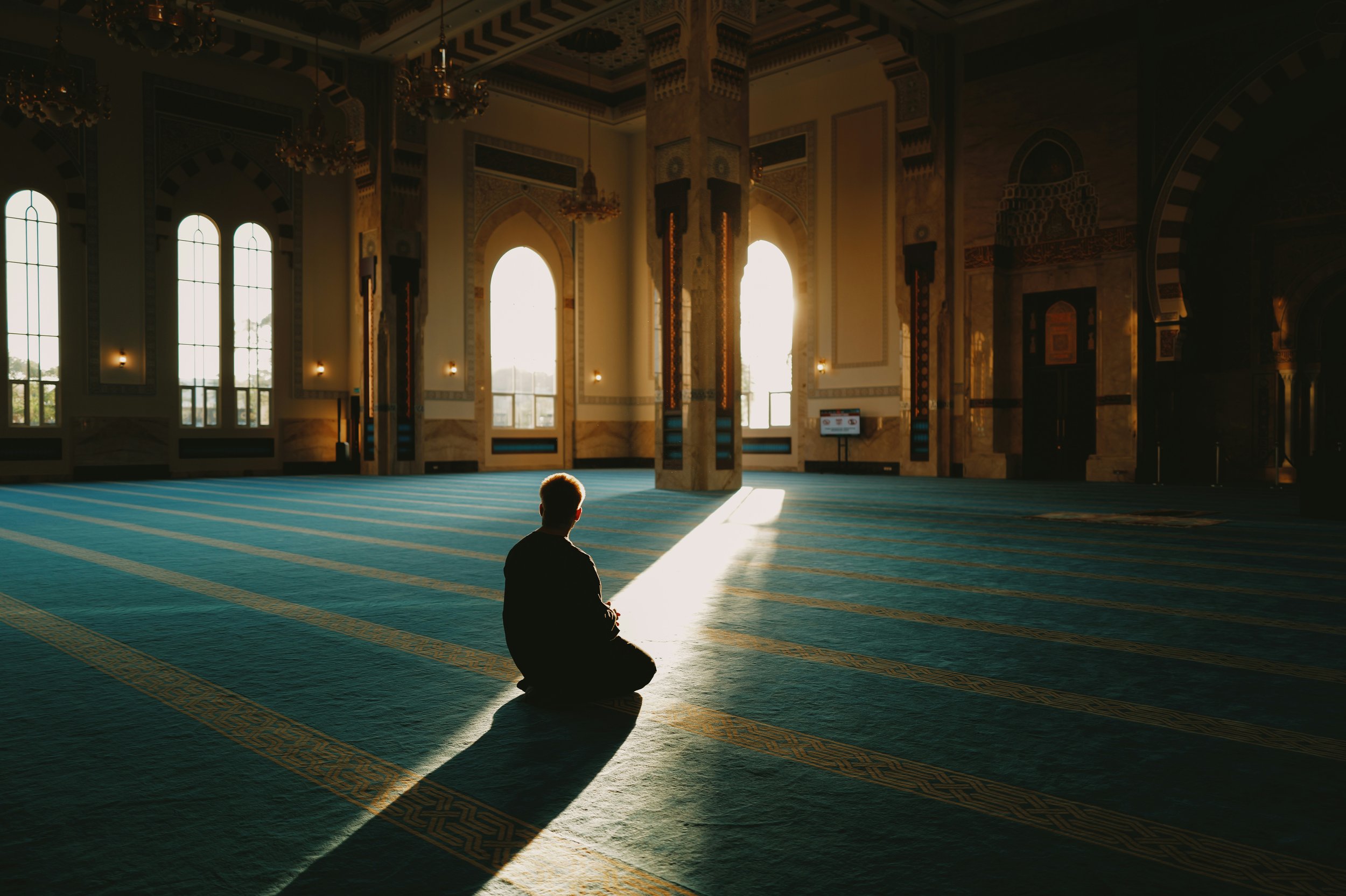

Photo by Milan Popovic on Unsplash
It is this opening which leads us to receive His guidance, both in direction, as well as in taming and polishing the edges of our nafs. That inner yearning we hear is His Light guiding us towards some place, or some thing; that inexplicable magnetic pull which we can barely fathom nor explain, and which at times might even seem completely counter-thetical to our rational mind.
And so if our heart is calling upon us to take an outward journey, perhaps there is a wisdom that resides in that journey, and wisdom to be received in that journey that is necessary for us. For the outward will nevertheless evoke the inward, and the journey you take with your feet, when sincere, will also be taking place within your heart. In the end, it is this journey - of the heart - that is essential, and forever calling out to us to undertake.
May Allah bless us with a heart worthy of being His abode.
May He guide us, shed Light upon our selves, and grace us with His remembrance on our tongues, and in our hearts.
Ameen.
References
Jalal al-Din Rumi, The Song of the Reed (trans. #12 - Helminski), Dar al-Masnavi
https://www.dar-al-masnavi.org/reedsong.html↩︎Your Soul Is Homesick: It Wants to Return to Allah, YouTube
https://www.youtube.com/watch?v=xb_dR3AOO6s↩︎↩︎Abu Nuʿaym al-Isfahani, Hilyat al-Awliyāʾ, 8/15; cited in Abu Amina Elias
https://www.abuaminaelias.com/dailyhadithonline/2020/02/09/ibrahim-knows-nafs-rabb/↩︎Hilyat al-Awliyāʾ, Hadith no. 135; Hadith Answers
https://hadithanswers.com/prepare-for-death/↩︎Seyyed Hossein Nasr et al., The Study Quran, commentary on 59:19, p. 1355 (2015)↩︎
“Whoever Knows Himself Knows His Lord”, Muwasala (2023)
https://muwasala.org/2023/01/01/whoever-knows-himself-knows-his-lord/↩︎Abu Amina Elias, If He Comes Walking, I Come Running (2017)
https://www.abuaminaelias.com/dailyhadithonline/2017/06/01/if-he-comes-walking-i-come-running/↩︎
Further References
The following talks were not cited directly in the essay, but offer helpful context and deeper reflection on the themes discussed:
Your Anxiety Is a Signal, Not a Flaw — Shaykh Abdal Hakim Murad
A grounded reflection on anxiety, attachment to the world, and spiritual awareness.
https://www.youtube.com/watch?v=y9mvzg45-zYThe Struggle for Spiritual Growth — Shaykh Abdal Hakim Murad
Insights on inner development, the challenges of the nafs, and navigating spiritual states.
https://www.youtube.com/watch?v=_eJ8N3YiNMw
Related Posts



The featurelessness of the Ka'abah is symbolic of this non-representation, and an affirmation of the monotheistic creed. And particular to Islam, its veiled-ness symbolizes the unknowability, the ineffability, and hence the inability to represent or depict Allah.